

Is Snowkiting Dangerous? What You Really Need to Know
“Is snowkiting dangerous?”
It is probably the question that comes up most often among people discovering what snowkiting actually involves.
Watching a kite tow a rider across the middle of a mountain can be impressive. Many people immediately picture avalanches, high speeds and extreme conditions.
The reality is quite different.
Like skiing, kitesurfing or paragliding, snowkiting is a sport that carries risks. But ridden in the right conditions, with proper supervision and on suitable terrain, it is accessible to a very wide range of people.
Here is what you really need to know.
The biggest risk is not the one you expect
When people think about the mountains, avalanches usually come to mind first.
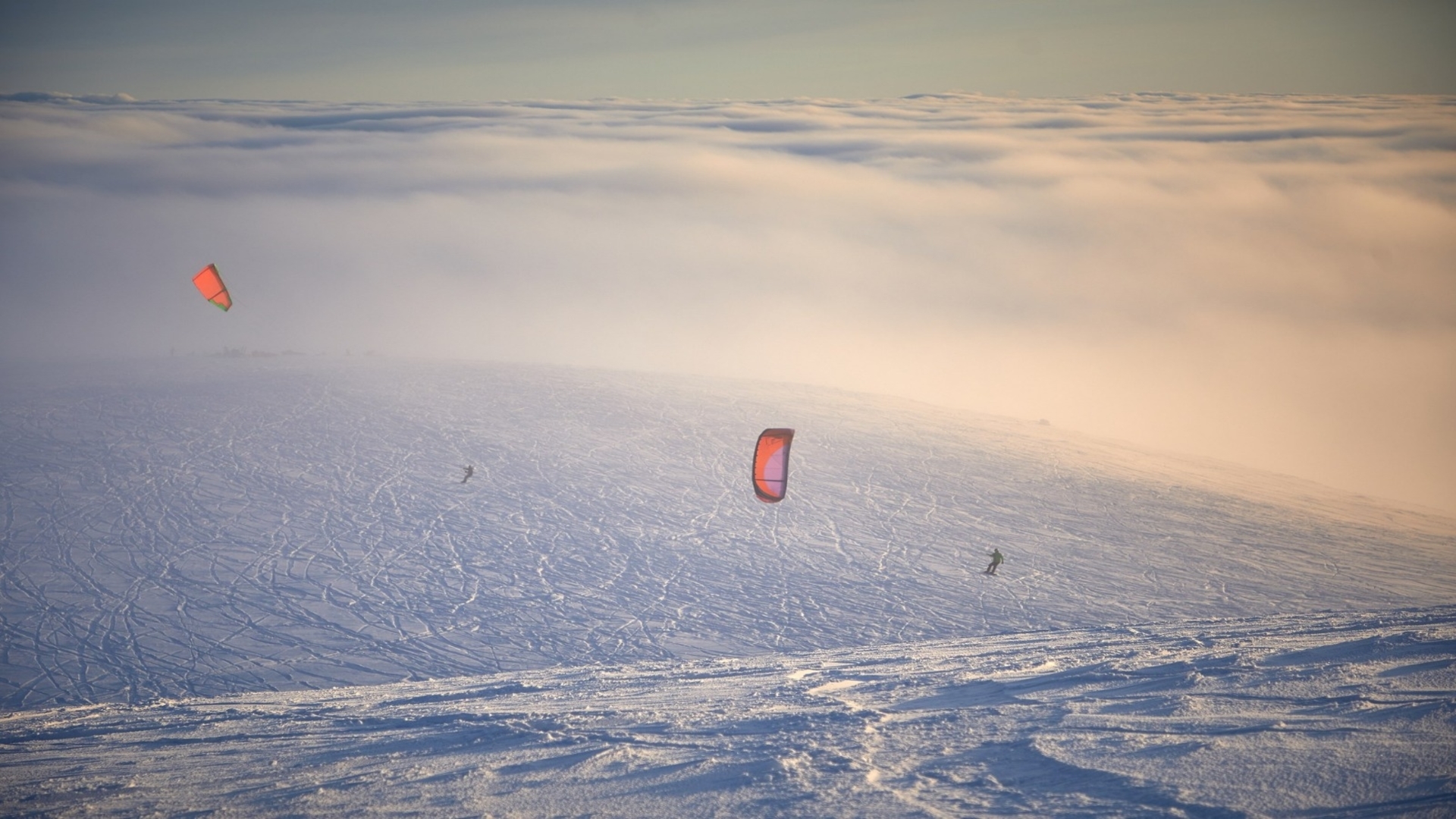
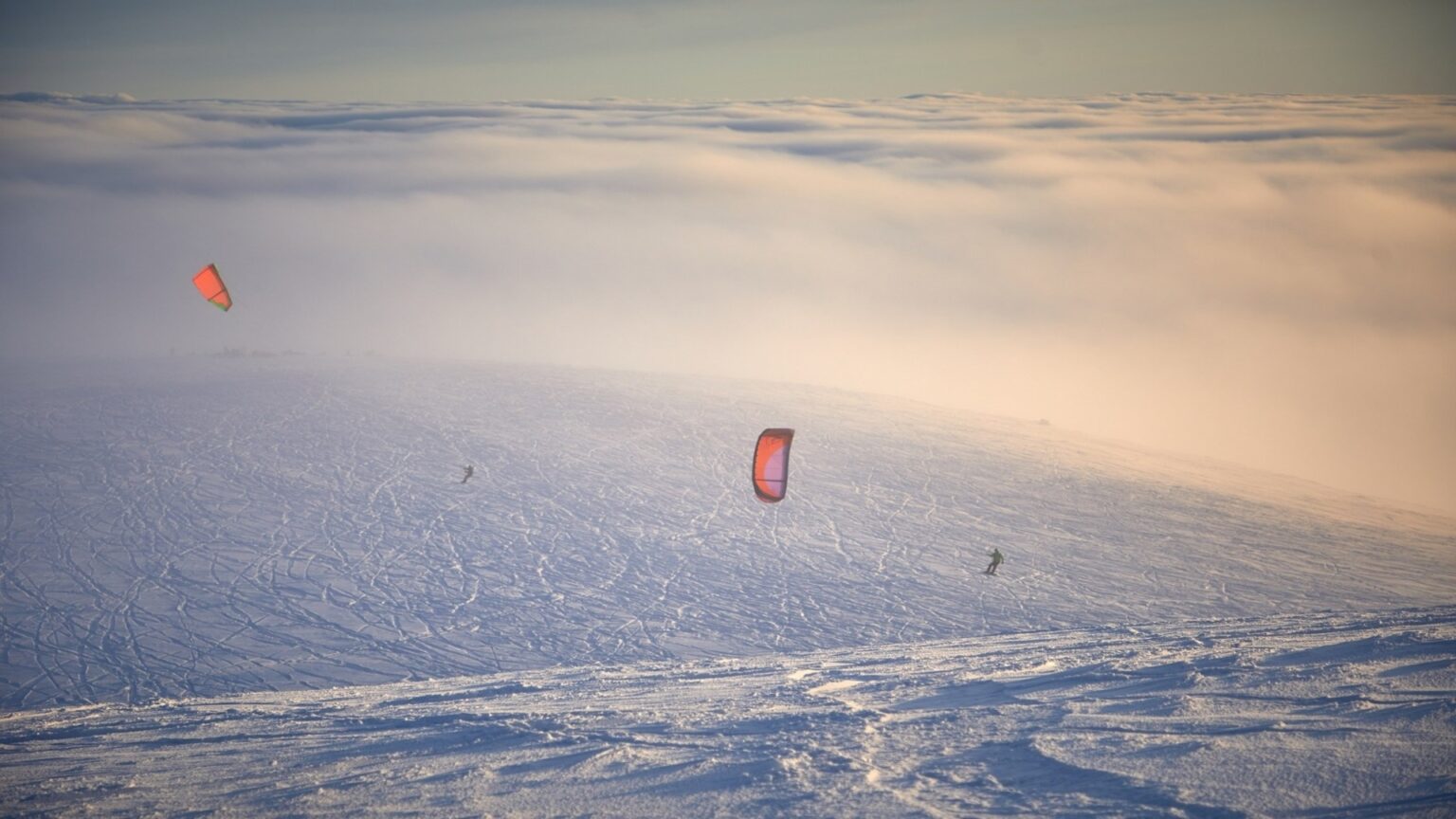
In reality, most snowkiting sessions do not take place on steep slopes but on wide snow plateaus, open valleys and frozen lakes.
Those terrains have very gentle gradients, where the avalanche risk is close to non existent.
The spots used for beginners, such as the plateau at Col du Lautaret, are chosen precisely for their safety and their easy access.
Wind is the factor that matters most
As in kitesurfing, the real safety factor is the wind.
A kite that is too big, or weather conditions that have been misjudged, can quickly turn a session into a difficult one.
This is why checking the forecast before heading out and choosing a kite size suited to the conditions is essential.
On a guided trip, that analysis is done every day by the instructors, who then pick the spot and the equipment that fit the conditions best.
Can you get dragged away?
It is a common worry among beginners.
In practice, modern kites come with very effective safety systems.
If anything goes wrong, pulling the quick release is enough to neutralise the power of the kite.
Bars made for snowkiting often carry a 5th line, which puts the kite completely out of action and makes it easier to control once it is on the ground.
Learning those moves is one of the very first things taught in an introductory session.
Is snowkiting more dangerous than skiing?
Not necessarily.
In skiing, injuries often come from collisions, from falls at speed or from crowded pistes.
In snowkiting, riders are usually out in large open spaces, far from the lifts and far from the crowds.
The risk does not disappear, of course, but it is a different one.
As in every snow sport, caution, experience and respect for the conditions remain your best allies.
Do you need specific safety equipment?
For classic riding on snow plateaus, a helmet is essential.
Clothing suited to winter conditions, goggles and good gloves are strongly recommended as well.
Once the riding moves towards high mountain terrain, or towards slopes that can produce avalanches, specific equipment becomes necessary: a transceiver, a shovel and a probe.
That kind of riding concerns experienced riders, though, and is not what a discovery session looks like.
Can you learn on your own?
It is technically possible to start on your own, but it is not recommended.
Snowkiting asks you to understand the wind, how the equipment works, the safety systems and the specifics of the terrain.
A few hours with an instructor generally build the right reflexes far more quickly and prevent mistakes that could turn dangerous. Our complete guide to snowkiting covers what those first hours look like.
It is also the best way to progress with confidence.
Is the weather itself a danger?
Yes.
Wind is not the only element to take into account.
Fog, snowfall, severe cold or reduced visibility can make a session far more complicated.
Experienced riders learn to call it off when the conditions are not there.
In the mountains, knowing when not to go out is part of safety itself.
So, is snowkiting dangerous?
Snowkiting is neither an extreme sport reserved for an elite, nor an activity without risk.
Like skiing, kitesurfing or mountaineering, it calls for serious learning, the right equipment and a good reading of the conditions.
Ridden on suitable spots, with a kite matched to the wind and competent supervision, it turns out to be a remarkably safe and accessible sport.
Those are exactly the conditions in which Snowkite Sensation runs every one of its trips. The spots are selected for their safety, the conditions are analysed daily and the supervision is handled by experienced instructors, so that everyone can discover the sport in confidence.
Before you go, the best advice stays simple: get proper training, respect the mountain and never underestimate the wind. Those few rules are what let you fully enjoy one of the finest winter sports there is.
Further reading
If you want more information about the safety system that changes everything on snow, you can read our article The Snowkite 5th Line.
If you want more information about the most extreme side of the sport, you can read our article Ridge Soaring in Snowkiting.
If you want to start with us on a safe, easy-access spot, you can look at our destination Lautaret, France.