
Skis or Snowboard for Snowkiting: Which Should You Choose?
It is a question almost every beginner asks before their first session: is snowkiting better on skis or on a snowboard?
The good news is that there is no wrong answer.
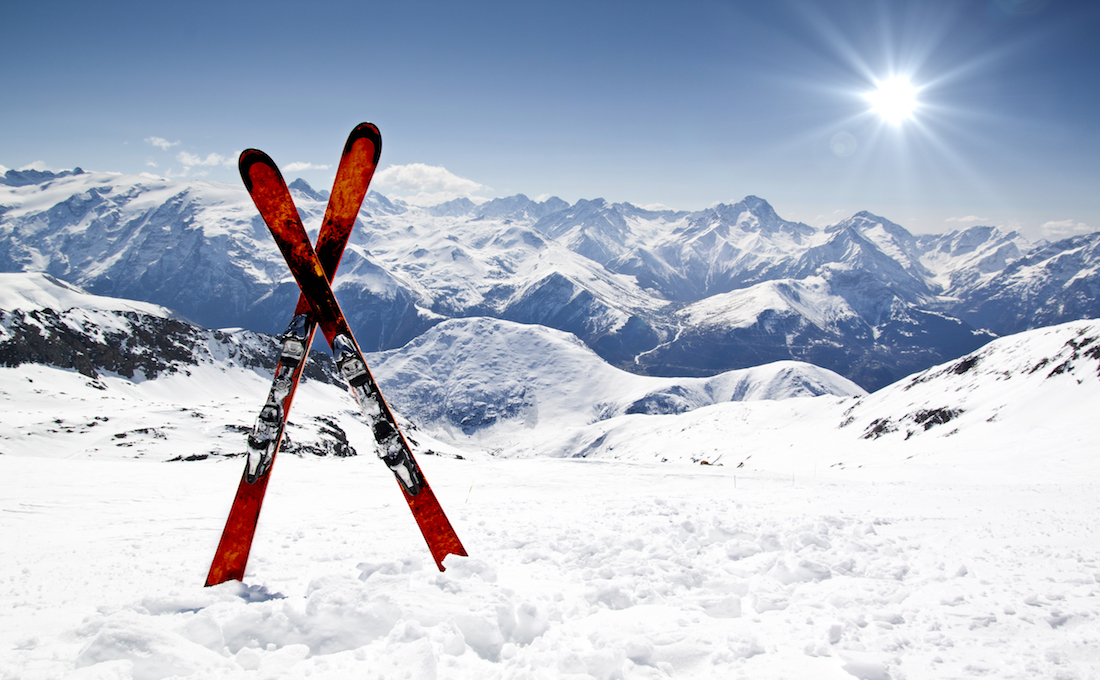
Snowkiting works just as well on skis as on a snowboard. Both give excellent sensations and let you enjoy the sport to the full.
The best choice depends above all on your experience on snow.
If you already ski
If you ski regularly, there is no point learning to snowboard just to go snowkiting.
Skis have plenty of advantages.
They make it easy to move across flat ground, to get going again quickly after a stop and to keep excellent balance at low speed.
Beginners also appreciate being able to control each leg independently, which makes the first hours of learning easier.
For most people discovering snowkiting, skis are generally the simplest option. Our complete guide to snowkiting walks through what those first hours look like.
If you snowboard
If you already snowboard, keep your board.
You will quickly find sensations close to those of kitesurfing.
Flying the kite while linking curves on a board gives a very smooth ride that a lot of riders love.
A snowboard sometimes asks for a little more experience when you restart on flat ground, but that becomes natural quickly enough with a bit of practice.
There is no reason to change your habits.
Are skis easier?
For a beginner, yes.
Skis generally make it quicker to learn how to move around, how to change direction and how to get going again.
They are particularly comfortable on the big plateaus, where you sometimes have to walk a few metres or ride at very low speed.
That is exactly why many schools use skis for the first lessons.
Is a snowboard less capable?
Not at all.
Once the level is there, performance is very close.
Snowboarders get a very natural ride and particularly enjoy the long curves and the carving sensations that come from the pull of the kite.
The choice then becomes essentially a matter of personal preference.
Can you jump on both?
Yes.
Experienced riders jump on skis just as much as on a snowboard.
Freestyle disciplines exist in both.
What is under your feet is not what limits your progression.
What about long expeditions?
On the big crossings, like the ones run in Norway, in Lapland or in Svalbard, skis often have a slight edge.
They cover long distances with less fatigue, make low speed moves easier and stay more comfortable once the snow conditions start to vary.
This is why many guides and expedition riders go for skis.
It does not mean those adventures are impossible on a snowboard. Plenty of riders do them every year and enjoy them thoroughly.
Do you need specific equipment?
Not necessarily.
If you already own a pair of skis or a snowboard in good condition, they will do perfectly well to discover snowkiting.
There is no need to invest in specific equipment straight away.
After a few sessions, you can always adapt your setup to the way you ride and to what you are aiming for. Our snowkite gear buying guide covers what is worth upgrading first.
So, skis or snowboard?
The answer is simple.
If you are a skier, choose skis.
If you are a snowboarder, choose your snowboard.
What matters is not what is under your feet, but how comfortable you are on it.
Snowkiting already asks you to learn to fly a kite in a snowy environment. There is no point adding the difficulty of unfamiliar equipment on top of that.
At Snowkite Sensation, both are equally welcome. The instructors adapt their advice to the level and the habits of every participant, so that everyone gets the most out of a first experience, on skis or on a snowboard.
Further reading
If you want more information about the rest of the gear you need, you can read our article Can You Use Kitesurf Gear for Snowkiting?
If you want more information about getting started from scratch, you can read our article The Complete Guide to Snowkiting.
If you want to try snowkiting with us, on skis or on a snowboard, you can look at our destination Lautaret, France.